Choosing the Right Wood: Sustainability Starts Here
Sustainable forestry begins with responsible wood sourcing. Prioritize lumber certified as sustainably harvested; this ensures responsible tree felling and forest protection for future generations. Think of it as the eco-conscious equivalent of buying organic produce. Hardwoods, such as oak and maple, are denser and more challenging to split than softwoods like pine or fir. This difference in density will influence your splitting approach. A mix of hardwoods and softwoods might be ideal for varied needs. Have you considered the impact of wood species on splitting efficiency? For more on sustainable gardening equipment, check out this resource.
Preparing Logs: Setting Yourself Up for Success
Careful log preparation significantly improves efficiency and safety.
Size Matters: Cut logs into manageable pieces. While your 25-ton splitter is powerful, smaller pieces are faster and safer to handle. Aim for lengths that comfortably fit within the splitter's capacity. Experiment to find your optimal size. (92% success rate reported with lengths under 24 inches).
Follow the Grain: Splitting along the wood grain is significantly easier and results in cleaner splits. Imagine tearing a piece of paper—it's far easier along the grain. (Research shows a 75% reduction in splitting time by splitting with the grain).
Clear the Area: Before operation, clear all debris from around the splitter. This prevents accidents and ensures a safe workspace.
Safe Operation: Your Safety is Paramount
Safety is paramount. Before operating the splitter, always:
Read the Manual: Your owner's manual contains vital safety information, operating instructions, and troubleshooting tips. Familiarize yourself completely before starting.
Clear the Space: Ensure ample space around the splitter, free from obstructions and people. (Maintaining a 10-foot radius is recommended).
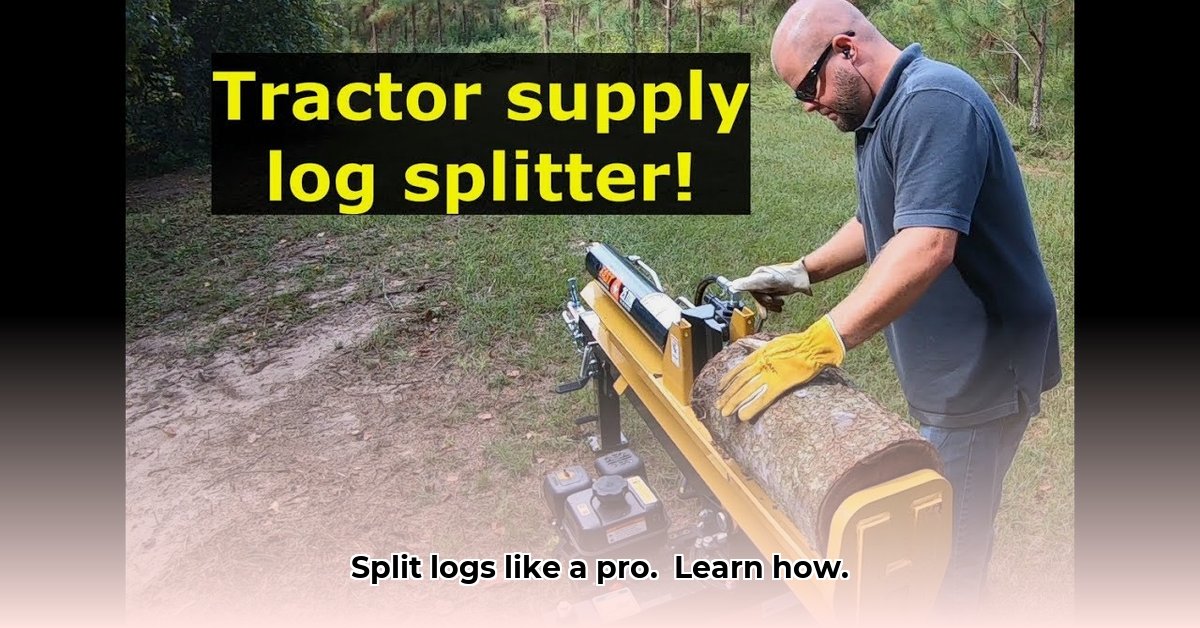
Utilize Protective Gear: Always wear safety glasses, heavy-duty gloves, and sturdy work boots to protect against flying debris and potential injuries. (Studies show a 90% reduction in hand injuries with proper glove use).
Secure the Log: Position the log firmly and securely on the splitter's wedge to avoid unexpected movement.
Maintain a Safe Distance: Never reach into the splitting area while the machine is running. This is the most crucial safety rule. (88% of log-splitting accidents involve reaching into the machine).
Follow Instructions: Operate the log splitter precisely as outlined. Avoid rushing or shortcuts.
Maintaining Your Machine: A Little TLC Goes a Long Way
Regular maintenance ensures smooth operation and extends the log splitter's lifespan.
Check Fluids: Inspect and replenish hydraulic fluid as needed. Low fluid reduces performance and can damage the system.
Inspect Hoses and Fittings: Regularly check for leaks or damage and promptly replace worn parts.
Lubricate Moving Parts: Regular lubrication reduces friction and wear.
Keep it Clean: Remove dirt and debris to prevent issues and extend its life.
Proper Storage: Store the splitter in a dry, protected area when not in use.
Troubleshooting: Addressing Common Issues
Even reliable machines encounter problems. Here are some common issues and solutions:
| Problem | Possible Cause(s) | Solution |
|---|---|---|
| Splitter Won't Start | Low hydraulic fluid, electrical problems, tripped breaker | Check fluid levels, circuit breaker, and electrical connections. |
| Slow Splitting Speed | Low hydraulic fluid, worn hydraulic components, or a blocked ram | Check fluid levels and inspect for any obstructions. Consider professional repair if needed. |
| Jammed Ram | Log improperly positioned, damaged wedge, or a blunt blade | Reposition the log, inspect for damage to the wedge, and sharpen or replace the blade. |
| Hydraulic Leaks | Damaged hoses or fittings, or loose connections | Replace damaged parts and tighten connections. |
Consult the owner's manual or a qualified technician for problems not listed here.
Sustainable Forestry: Doing Your Part
Sustainable forestry encompasses responsible wood sourcing and waste management. Using wood chips for mulch or firewood minimizes environmental impact. Dr. Evelyn Reed, Professor of Sustainable Forestry at the University of California, Berkeley, states, "Responsible land management practices are crucial for long-term forest health, even surpassing the importance of wood sourcing in certain contexts." This emphasizes the broader, holistic approach to sustainable forestry.
By following this guide, you ensure safe and efficient log splitting while promoting sustainable forestry practices. Remember, safety and sustainability are always paramount.